The spring.
Carries the supported load while allowing mechanical movement.

Silencer / Development & testing
The Silencer brings springs, damping and the supported load into one mechanical system. Its development examines how these elements work together, using a dedicated test rig and computer simulation.
Explore the thinking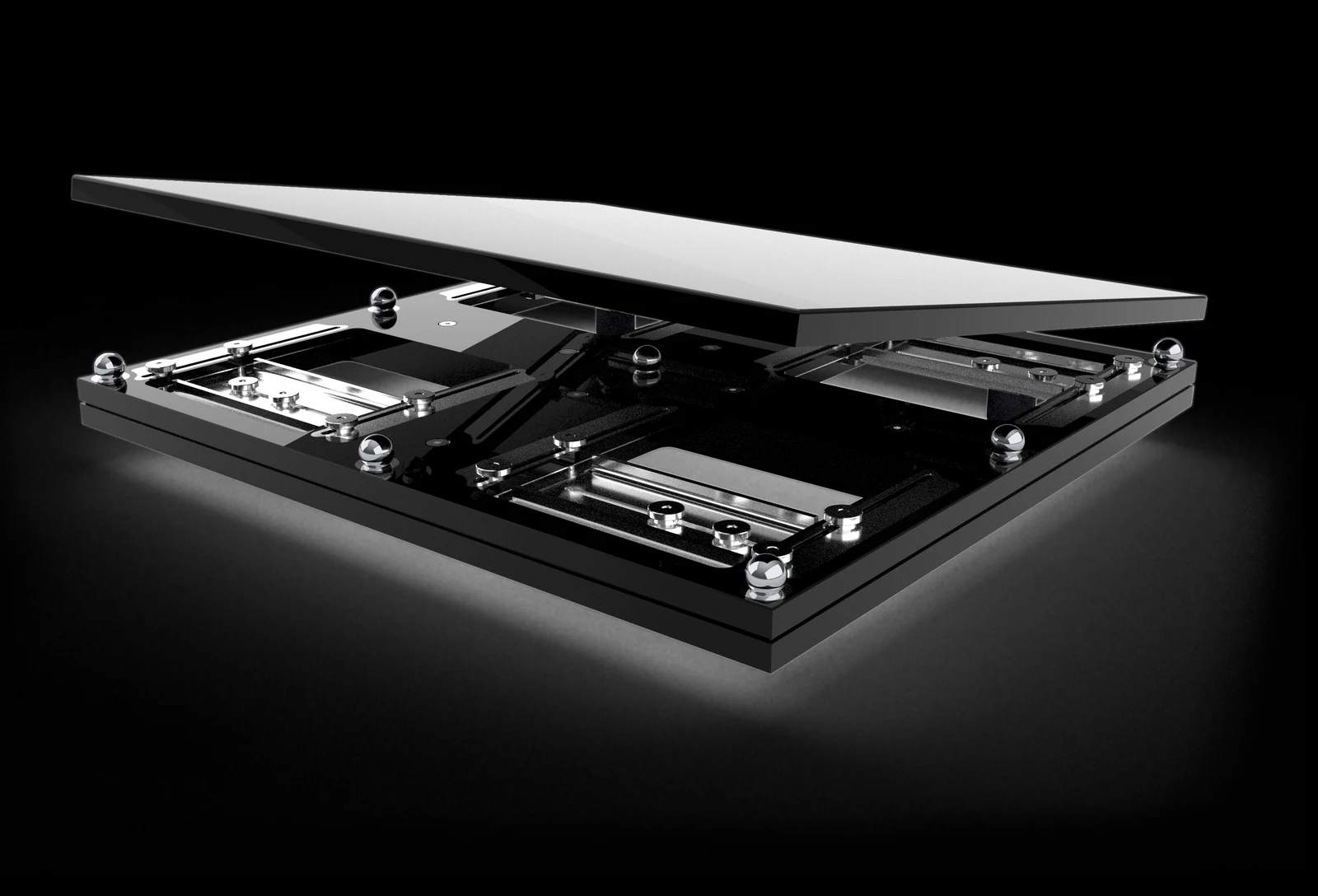
01 / The principle
The spring carries the load and allows movement; damping controls the resulting oscillation. For SILENCER II, I·ctra specifies natural frequencies of 6 Hz vertically and 8 Hz laterally, with a maximum vertical vibration amplitude of approximately ±12 mm.
Carries the supported load while allowing mechanical movement.
Controls oscillation within the spring-and-load system.
Its mass forms part of the system being considered.
02 / The supported load
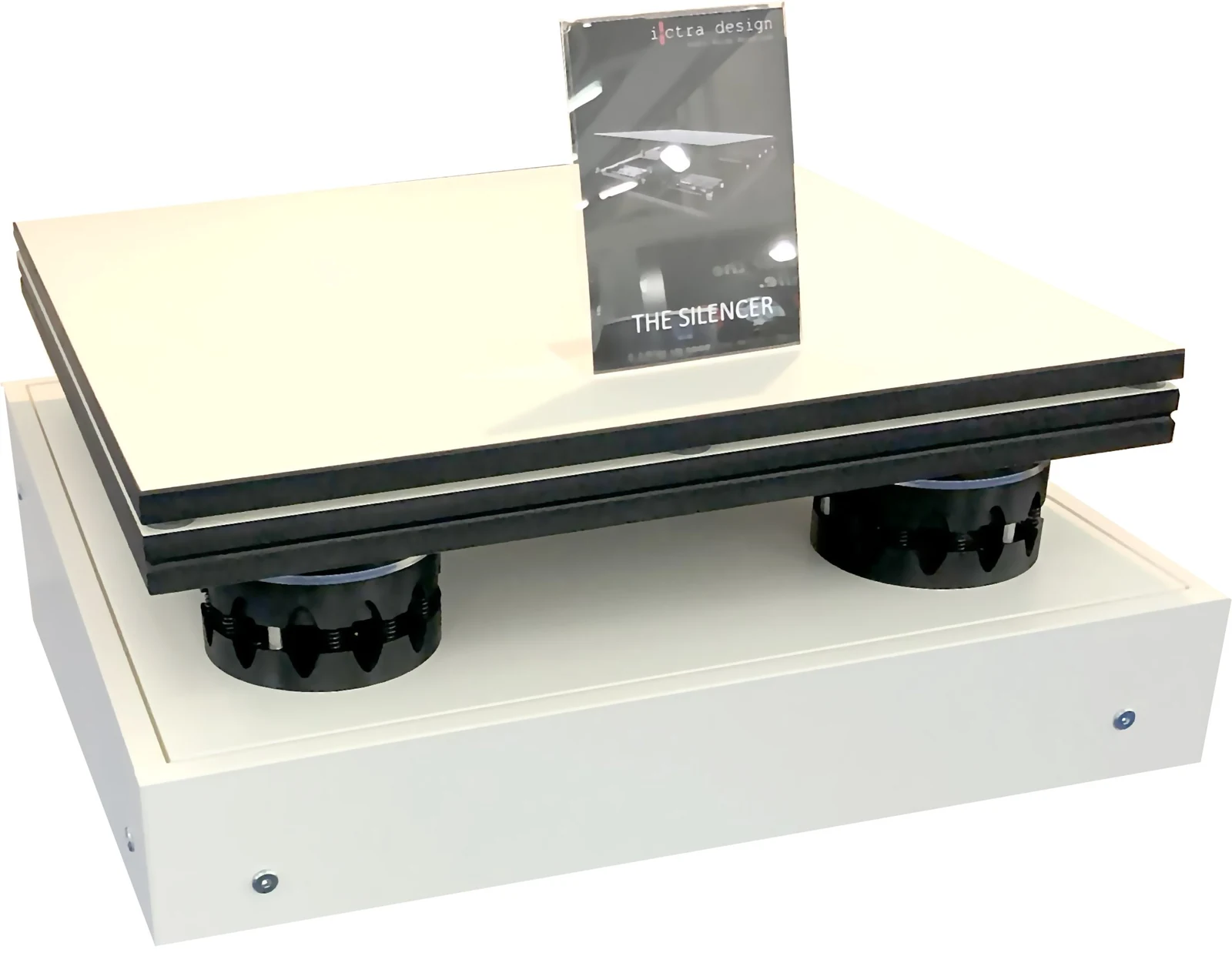
The load establishes the spring and damper’s operating point. It is therefore part of the engineering calculation, rather than simply an item placed on top. The development work considers the platform and its supported component together.
03 / The test method
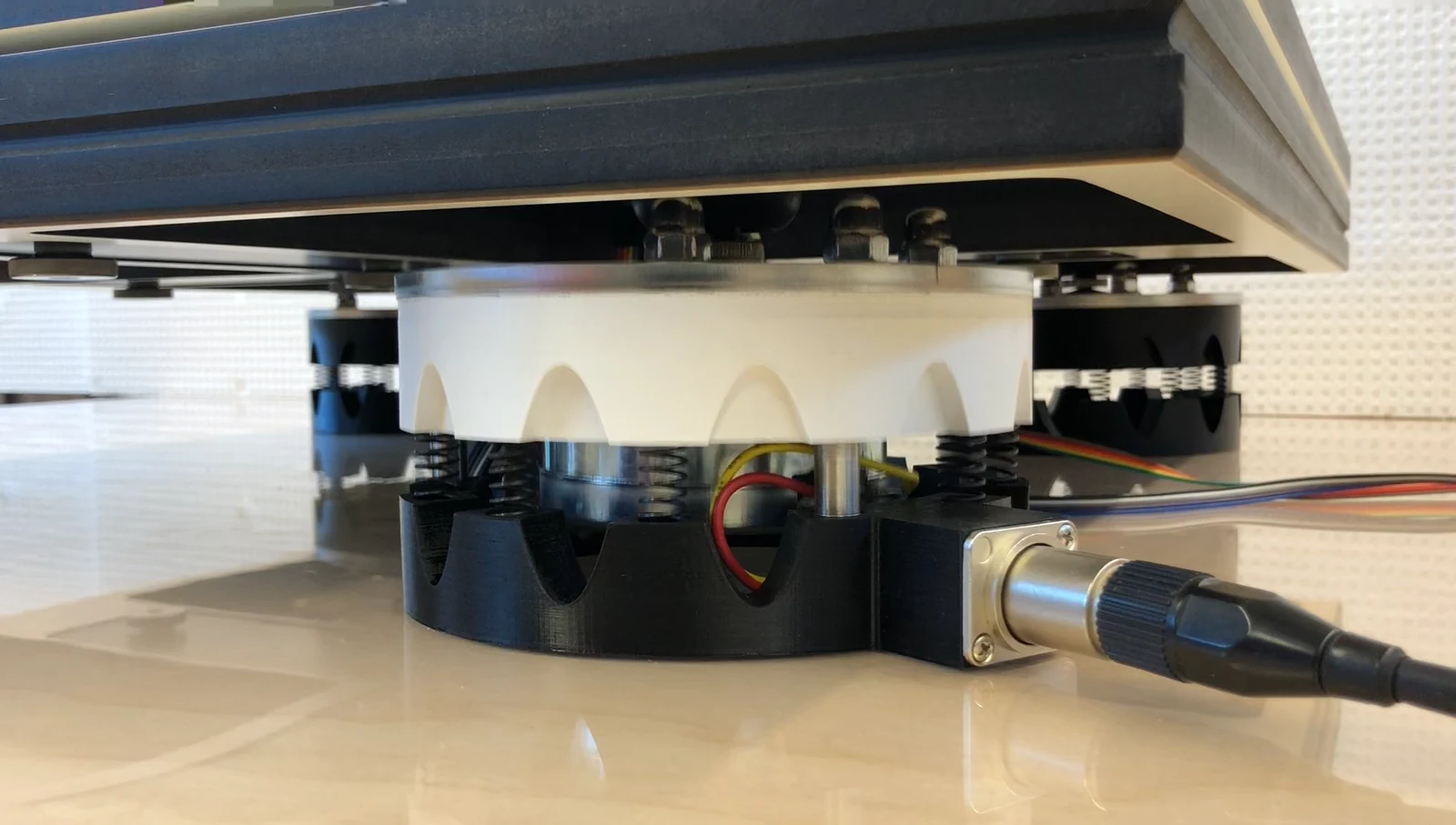
A signal generator and amplifier drive a dedicated vibration test rig. Accelerometers record the response, including movement at the top plate. Repeatable input signals allow structural designs to be compared within the test setup.
Silencer II / Recorded response
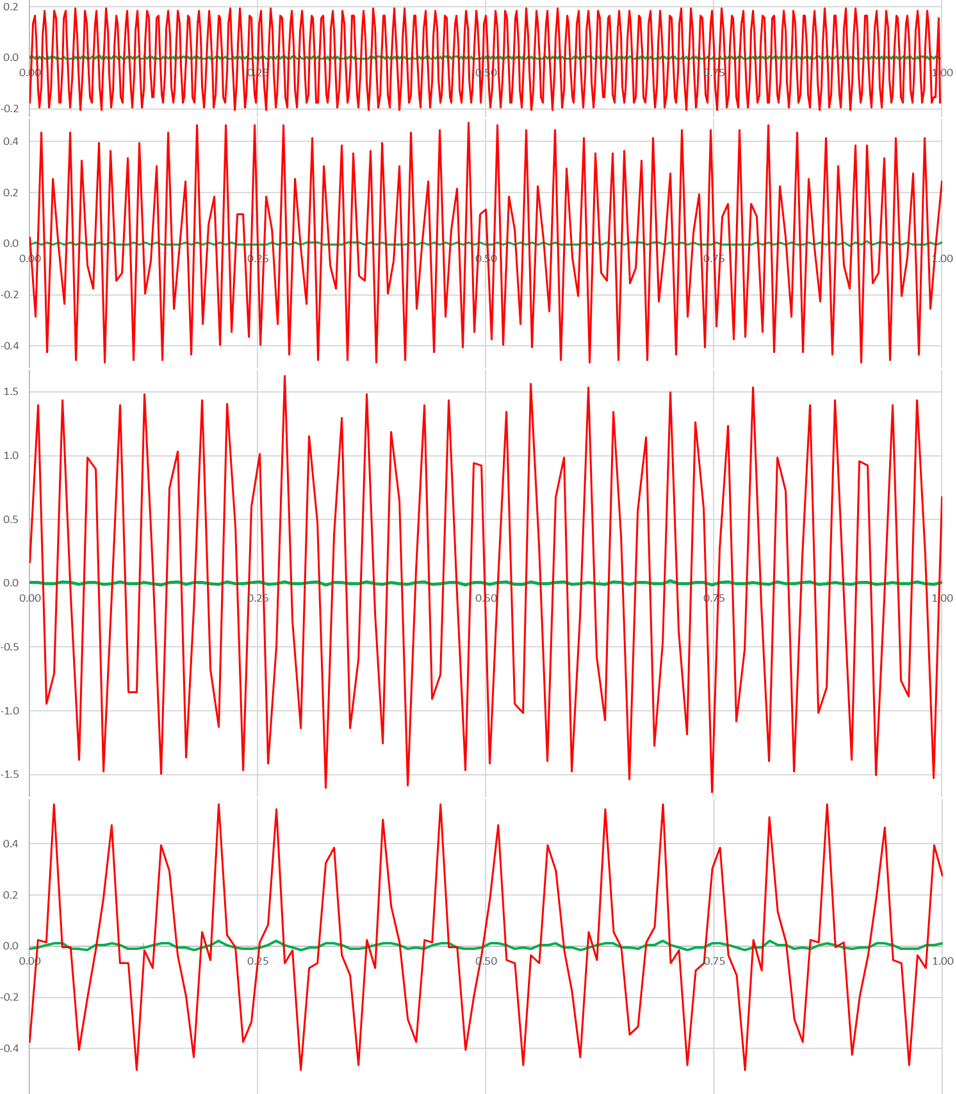
These recorded signals come from the Silencer II development test. The red trace shows the test-rig reference signal; the green trace shows the response recorded at the top plate.
I·ctra reports 96–98% isolation effectivity at the four measured frequencies below. The comparison covers 10 Hz < f < 100 Hz.
Red / Reference signal
Green / Top-plate response
Test frequency · reported isolation effectivity
The vertical scales differ between recordings. The percentages describe this documented test setup at the stated frequencies. Source: I·ctra engineering presentation, April 2026, slides 24–25; product presentation, September 2026, slides 3–4.
04 / Measurement & simulation
Measured results inform the computer simulations used during development. This gives I·ctra a way to examine the relationship between the physical assembly and its calculated response, and to investigate the effect of design choices.
Apply
A controlled signal excites the test assembly.
Observe
Sensors record movement within the test setup.
Investigate
The measurements inform the computer model and further development.
Sources: I·ctra technical product information, engineering presentation (April 2026) and SILENCER product presentation (September 2026). Images and measurements show the documented development examples.